About Shell and Tube Heat Exchanger
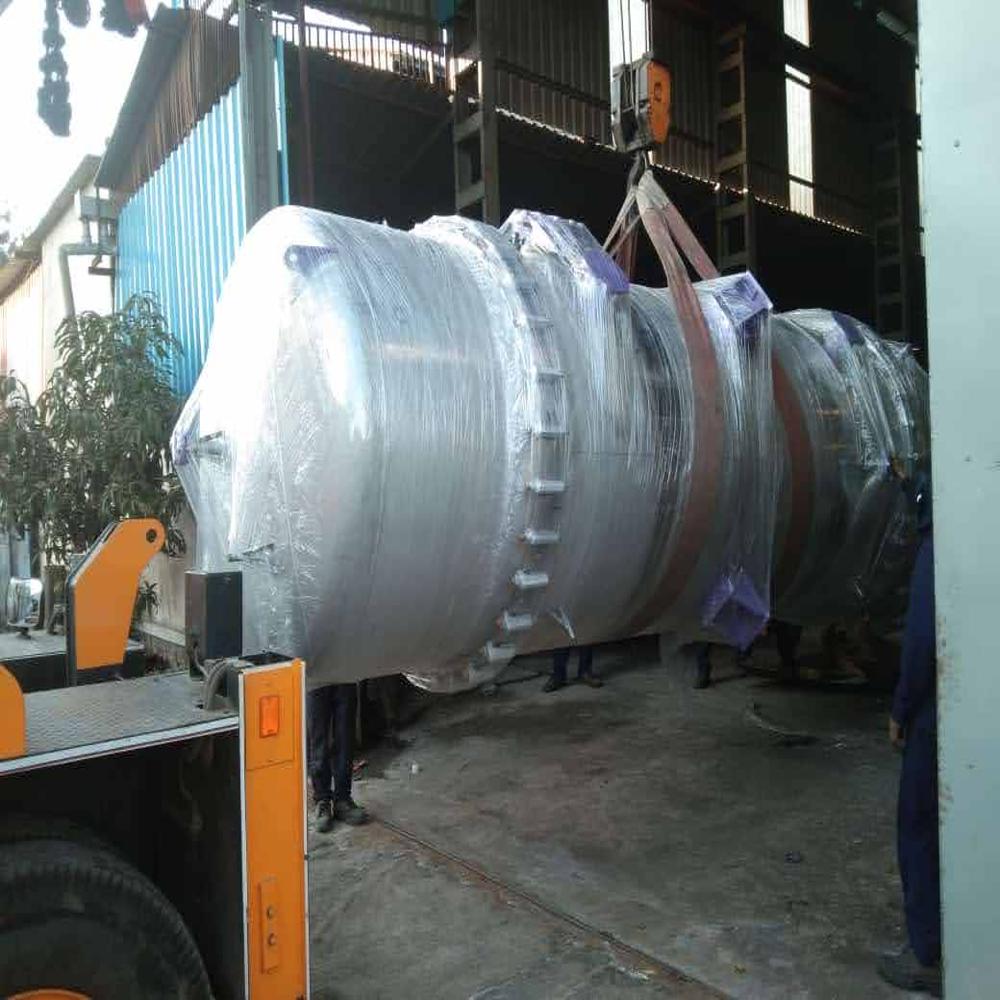
Shell and Tube Heat Exchanger
1. General Overview:
The supply shall include the design, fabrication, inspection, testing, and delivery of a Shell and Tube Heat Exchanger in accordance with the applicable codes and standards. The heat exchanger will be used for thermal energy exchange between two process fluids one flowing through the tubes and the other through the shell without direct contact between them.
2. Design Standards and Codes:
The equipment shall be designed and manufactured in accordance with the following (as applicable):
Engineered for Demanding Industrial EnvironmentsOur Shell and Tube Heat Exchanger is precision engineered to meet the rigorous needs of industries such as chemical, pharmaceutical, and power generation. With options for stainless steel, carbon steel, or copper construction, each unit is tailored for corrosion resistance and operational reliability. The customizable design and manufacturing according to international standards ensure optimal performance and adaptability to specific process requirements.
Customizable Specifications for Versatile ApplicationsWhether your project requires non-standard flow areas, specific tube dimensions, or unusual capacities, we offer customization across all major specifications. Tube lengths up to 6000 mm, diameters from 9.5 mm to 38 mm, and heat transfer surfaces up to 200 m2 are tailored to your application. Our manufacturing expertise supports precise tolerances and a variety of configurations to optimize your heat exchanger's efficiency and longevity.
FAQ's of Shell and Tube Heat Exchanger :
Q: How does the Shell and Tube Heat Exchanger accommodate varying process requirements?
A: The heat exchanger offers customizable tube and shell side flow areas, tube diameters (9.5 mm to 38 mm), lengths up to 6000 mm, and heat transfer area up to 200 m2. This flexibility ensures it meets specific process demands across different industries.
Q: What materials are used in the construction of these heat exchangers, and how does that benefit users?
A: We use high-grade stainless steel (SS304/SS316), carbon steel, or copper depending on the required corrosion resistance and application. This selection enhances durability, operational efficiency, and longevity in harsh working conditions.
Q: When should a Shell and Tube Heat Exchanger be deployed in an industrial setting?
A: These exchangers are ideal when precise temperature control and efficient heat transfer between fluids are required. Common deployments include chemical plants, pharmaceutical factories, power generation facilities, and HVAC systems.
Q: Where are these heat exchangers manufactured and supplied from?
A: Our Shell and Tube Heat Exchangers are manufactured in India, where we act as a supplier, exporter, manufacturer, and service provider for both domestic and international markets.
Q: What is the typical process followed in manufacturing this equipment?
A: The process involves welded construction using selected materials, adherence to ASME, TEMA, and IS standards, and precision engineering to maintain 1 mm tolerance throughout. Customization is guided by client specifications and application needs.
Q: How can users benefit from the customizable dimensions and capacity of this product?
A: Customizable dimensions (up to 3000 x 800 x 900 mm) and capacities (up to 100,000 kcal/hr or higher as required) allow the heat exchanger to integrate seamlessly into existing processes, maximizing heat transfer efficiency and plant productivity.
Q: What usage considerations should be taken into account for optimal operation?
A: Users should select the appropriate material grade for corrosion resistance, ensure compatibility with temperature and pressure ratings, and follow standard installation and maintenance practices for reliable performance over time.




 English
 Spanish
 French
 German
 Italian
 Chinese (Simplified)
 Japanese
 Korean
 Arabic
 Portuguese
 Send Inquiry
 Send Inquiry

